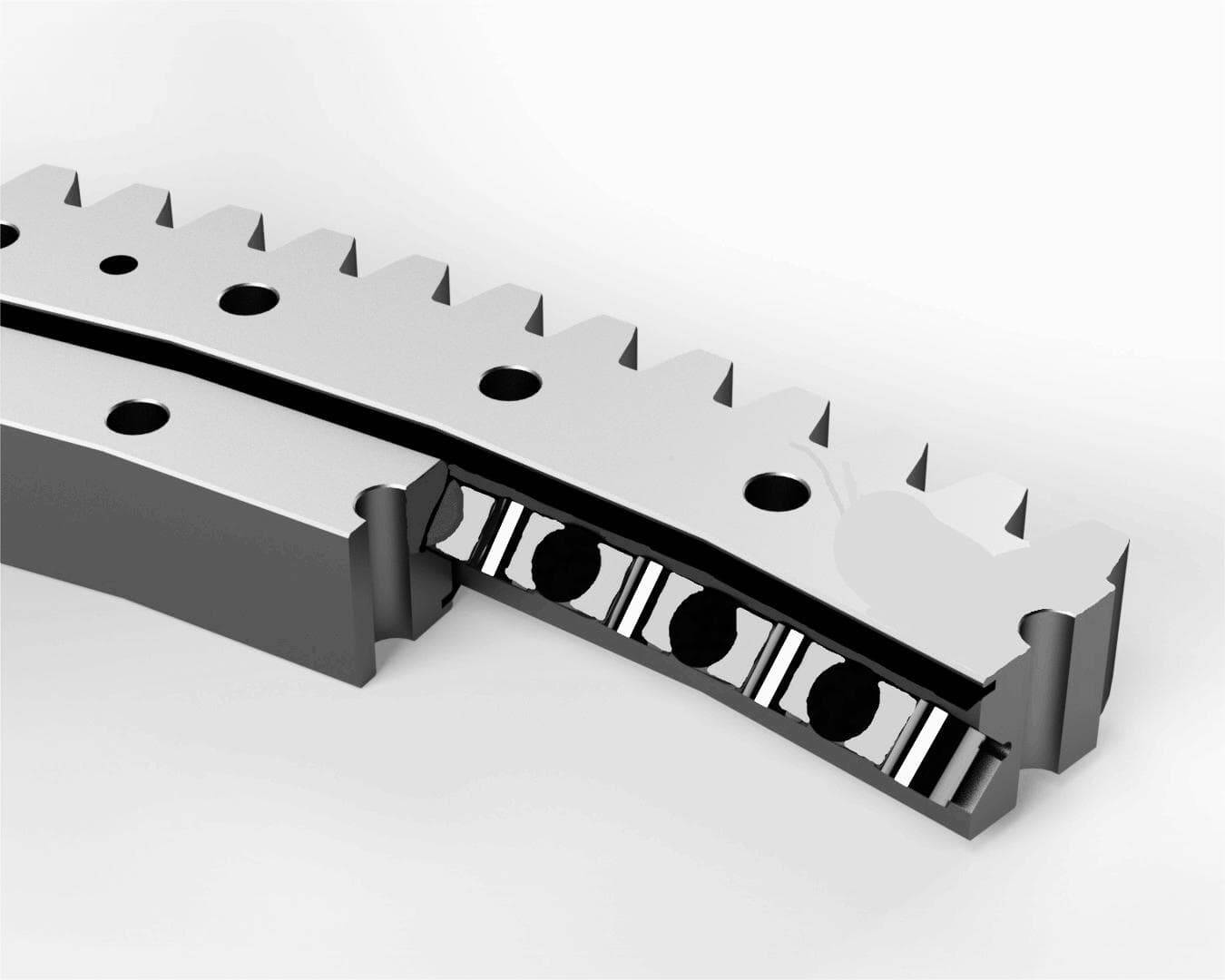
1. Understanding the Basic Structure
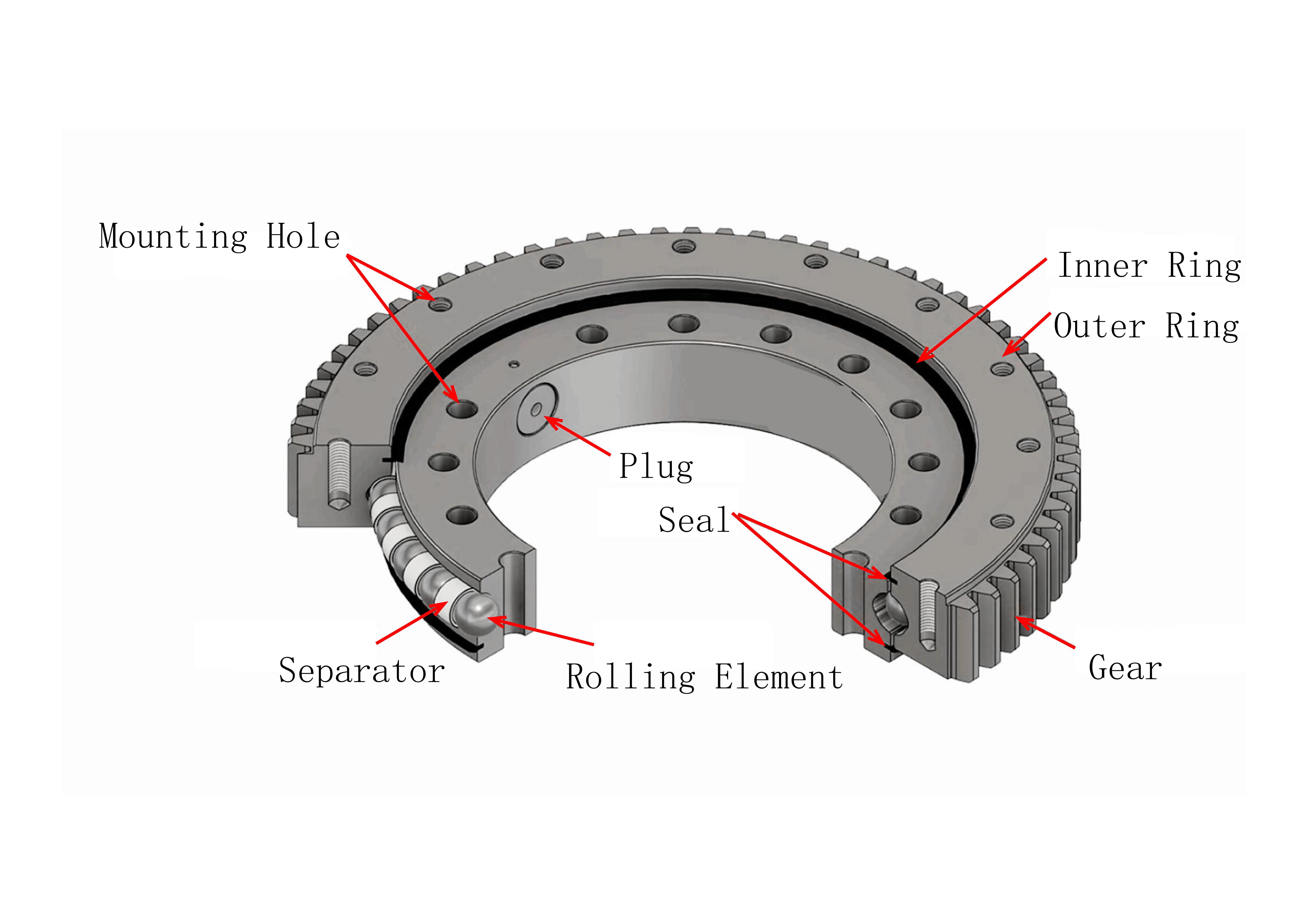
A slewing bearing typically consists of an inner ring, an outer ring, rolling elements (often balls or rollers), and separators or spacers that maintain consistent spacing. The gear on either the inner ring or outer ring (or both) allows for controlled rotational movement. Precision seals keep lubrication in and contamination out.
Below is a detailed schematic that illustrates the fundamental design of a slewing bearing, emphasizing core components such as rolling elements, seals, and gears:
2. How Rolling Elements Enable Smooth Rotation
Slewing bearings can include balls or cylindrical/tapered rollers. These rolling elements handle axial, radial, and tilting moment loads simultaneously, making slewing bearings versatile enough for applications in cranes, radar equipment, and offshore platforms. When the bearing is in motion, the rolling elements reduce friction between the inner and outer rings, allowing both heavy-duty and precise movement.
For a closer look at the rolling elements working within the raceway, see the cross-section below: